If you have ever seen abbreviations like when buying yarn RWS, GOTS or OEKO-TEX If you have come across
These small letters carry great meaning - they tell stories about Origin, animal welfare, environment, and responsibility.
But what exactly is behind it? And how do these labels, which are now found on so many labels, differ?
In this article, we explain to you clear, calm, and understandable, what the most important textile labels for yarns mean - and how you can classify them for yourself when Knitting.
Because every ball you choose is also a decision - for quality, mindfulness, and what matters to you.
Why textile labels are important
Wool, Mohair, or Silk - natural fibers are valuable.
But its production is also complex: It involves animals, people, and ecosystems around the world.
Certifications and labels help you to understand:
-
where a fiber comes from,
-
how it was processed,
-
and whether the environment and animal welfare were respected.
💚 A label does not replace the feeling in your hands - but it creates trust in what you cannot see.
An overview of the three major labels
1. RWS - Responsible Wool Standard
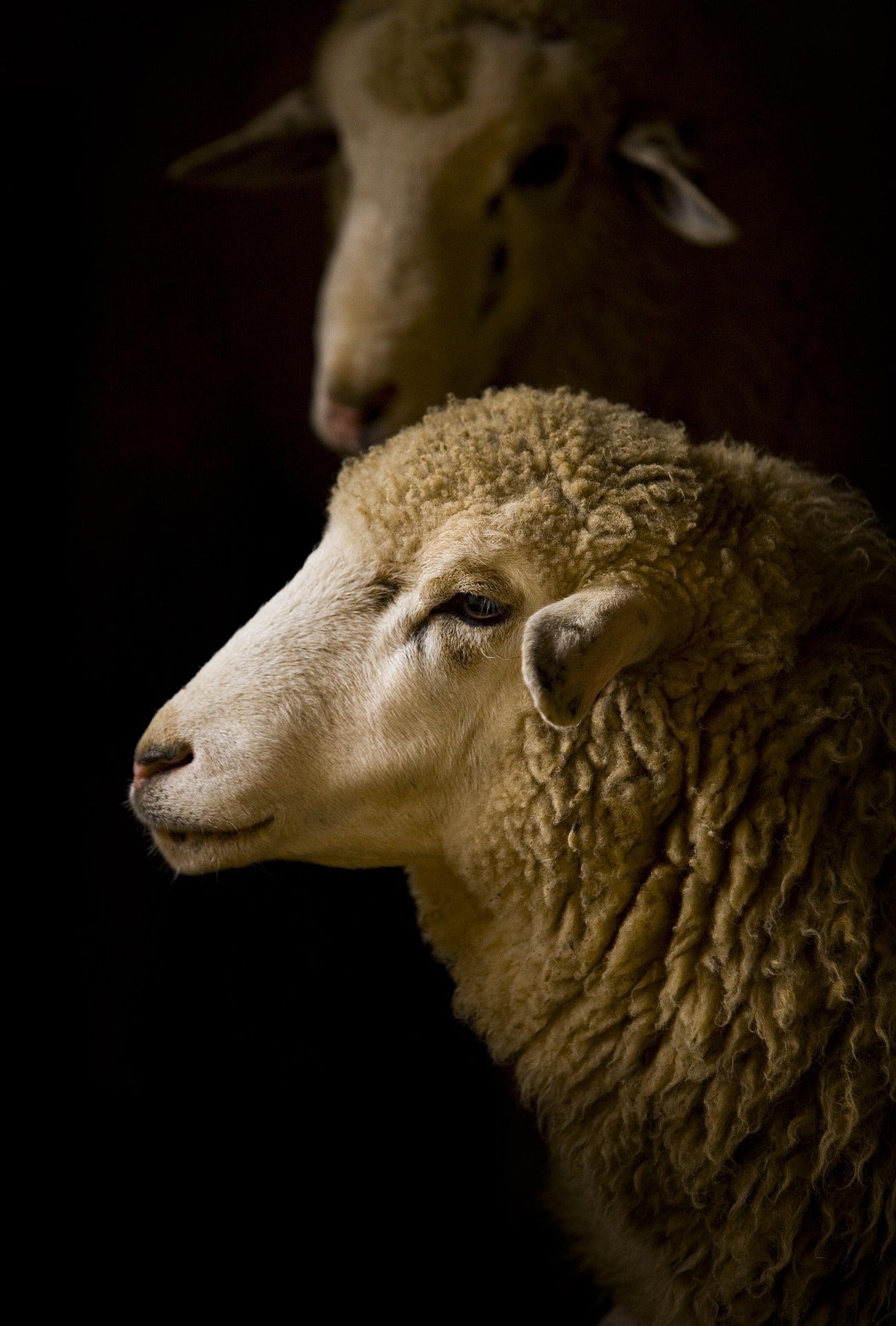
RWS (Responsible Wool Standard) is an international standard developed specifically for Virgin Wool.
It ensures that Wool ethical, animal-friendly, and environmentally conscious is produced - from the sheep to the yarn.
What RWS stands for:
-
Animal welfare: No mulesing practices, animal-friendly husbandry, clean shearing.
-
Sustainable grazing: Protection of soil, water, and biodiversity.
-
Traceability: Each batch is documented from the farm to the spinning mill.
-
Independent control: All farms are regularly audited.
💡 RWS applies exclusively to Wool - that is, fibers that come from sheep.
For other animal fibers like Mohair or Alpaca, there are separate standards (e.g., RMS or RAS).
This is how you recognize RWS yarns:
The label is usually on the label or in the Product Description indicated.
An example of this can be found in many high-quality Merino yarns, such as Knitting for Olive Merino.
👉 In short: RWS stands for Wool with respect - towards animals, people, and nature.
2. GOTS - Global Organic Textile Standard
GOTS is one of the best-known sustainability labels worldwide.
It stands for ecological and fair textile production from raw fiber to finished yarn.
What GOTS stands for:
-
Organic fiber origin: At least 70-95% of the fiber must come from certified organic farming or animal husbandry.
-
Environmentally friendly processing: No toxic chemicals, no heavy metals, no chlorine bleaching.
-
Social responsibility: Fair wages, safe working conditions, no child labor.
-
Certified supply chain: Every step - spinning, dyeing, packaging - is checked.
💚 GOTS is the most holistic standard, as it covers both ecological and social criteria.
Important to know:
-
GOTS applies not only for Wool, but also for Cotton, Silk, or blended yarns.
-
Only if the entire supply chain is certified may a product carry the GOTS logo.
A yarn with GOTS certification therefore stands for transparent origin and clean processing - and it also feels emotionally "right."
3. OEKO-TEX - Trust through testing
The OEKO-TEX STANDARD 100-You may already know this label from clothing or bedding.
Unlike RWS or GOTS, it focuses not on origin or animal welfare, but on the Harmlessness to humans.
What OEKO-TEX stands for:
-
Health protection: All components of the product (fibers, colors, labels) are tested for harmful substances.
-
Limits above legal level: E.g., no banned dyes, heavy metals, or allergenic substances.
-
Independent tests: Each product batch is regularly tested.
💡 OEKO-TEX says nothing about ecological or social standards, but it guarantees that you have a safe, skin-friendly yarn you hold in your hands.
The difference between RWS, GOTS & OEKO-TEX
|
Aspect |
RWS |
GOTS |
OEKO-TEX STANDARD 100 |
|---|---|---|---|
|
Focus |
Animal welfare & Environment (Wool) |
Ecology & Fairness (all textiles) |
Freedom from harmful substances |
|
Animal welfare |
✔️ yes |
✔️ for animal fibers |
❌ no |
|
Social criteria |
Partially |
✔️ yes |
❌ no |
|
Environmental aspects |
✔️ (Grazing & Water) |
✔️ (Cultivation, Processing) |
⚪ limited |
|
Applies to |
Virgin Wool |
Many natural fibers (Wool, Cotton, Silk) |
All textiles |
|
Certification |
Farm → Spinning mill |
Entire supply chain |
Final product |
💚 In short:
-
RWS protects the animal.
-
GOTS protects animals, people, and the environment.
-
OEKO-TEX protects you when worn.
Why the interplay matters
No label covers everything - each highlights a different part of the journey.
The most valuable yarns are often certified multiple times, for example RWS + GOTS + OEKO-TEX.
This ensures that both origin and processing as well as skin-friendliness are correct.
An example:
An RWS-certified Merino yarn with OEKO-TEX label means,
that the wool animal-friendly obtained, environmentally conscious processed
and free from harmful substances is.
This is the Triad of responsibility - Quality, ethics, and safety in one ball.
How to shop more consciously
Next time you choose yarn, you can orient yourself with three simple questions:
-
Where does the fiber come from?
→ Look for RWS, RMS, or RAS. -
How was it processed?
→ GOTS shows fair, environmentally friendly production. -
Is it skin-friendly?
→ OEKO-TEX provides security, especially for sensitive skin.
💚 Each of these decisions is a small contribution to a more mindful textile world.
Frequently Asked Questions (FAQ)
Is RWS the same as GOTS?
No.
RWS refers exclusively to wool and animal husbandry, while GOTS covers the entire textile chain and also other fibers.
Is OEKO-TEX more sustainable than GOTS?
Not necessarily.
OEKO-TEX only tests for harmful substances - GOTS additionally evaluates social and ecological criteria.
Is there also a seal for Mohair?
Yes - the Responsible Mohair Standard (RMS).
It works similarly to RWS but is specifically focused on the Angora goat and Mohair fibers.
You can find more about this in the article RMS explained.
What if a yarn does not carry a seal?
Lack of certification does not automatically mean poor quality.
Some small spinning mills or hand dyers work sustainably without getting certified - certificates are expensive and complex.
Transparency is important: Where do fiber and color come from?
Conclusion: Awareness you can feel
Seals like RWS, GOTS, and OEKO-TEX are guides in a complex world of yarns, fibers, and colors.
They help us, Trust and Transparency to find - and remind us that behind every skein there is a living origin.
Whether you knit a fine shawl with Knitting for Olive Soft Silk Mohair or with Knitting for Olive Merino your favorite sweater - You are holding more than just yarn in your hands. You are holding a decision for mindfulness, quality, and responsibility.
🧶 Choose consciously, knit slowly, and enjoy the feeling of creating with a clear conscience.
RMS explains: Responsible Mohair Standard
Needle Materials Compared: Wood, Metal & Carbon