
Alpaca Yarns: Soft, Warm, and Especially Skin-Friendly
Alpaca Wool is often discovered by people who don’t tolerate conventional wool well. This is due to the fiber structure: Alpaca fibers have less pronounced scales compared to sheep wool – less scratchiness, less irritation, fewer skin reactions. At the same time, alpaca is surprisingly warm: the fibers are partly hollow and therefore insulate particularly effectively, similar to down. Warmth with minimal weight.
Alpaca vs. Merino Wool – Which Is Warmer?
Alpaca Wool is generally warmer than Merino Wool at the same weight. At the same time, alpaca wool contains no Lanolin (the natural fat in sheep wool) – making it more tolerable for many people sensitive to wool. Those who react slightly to Merino Wool often tolerate alpaca without problems.
What alpaca can’t do: spring back. Alpaca fibers have hardly any natural Elasticity. A knitted piece made from pure alpaca can lengthen or stretch over time, especially with heavier projects like sweaters. For better Shape Retention, a blended yarn is recommended: alpaca with wool, silk, or Nylon gives the knitted piece more resilience and prevents sagging.
Baby Alpaca – What’s Behind It?
“Baby Alpaca” does not mean the yarn comes from young animals. It refers to the finest fiber quality sorted during shearing – the softest, thinnest fibers from the finest body zones of the animal. Baby Alpaca yarns are especially soft and have a delicate natural Sheen. They are usually more expensive than standard alpaca wool and are suitable for pieces worn directly on the skin.
What Projects Are Suitable for Alpaca?
Alpaca is especially popular for shawls, stoles, shoulder wraps, and lightweight sweaters – pieces where the drape of the fiber is an advantage. An alpaca scarf falls differently than a wool scarf: softer, heavier, with more natural movement. For textured patterns like cables or reliefs, alpaca is less suitable because it lacks Elasticity. For simple designs, hip knitting, and anything meant to flow, alpaca is a wonderful choice.
For sweaters with a lot of weight, we recommend a blended yarn – pure alpaca could lengthen over time. Short jackets, vests, and cardigans generally work better with pure alpaca than long sweaters.
Care for Alpaca Yarns
Most alpaca yarns are not superwash treated and should be washed by hand or on a wool program at 30°C. Alpaca felts less easily than sheep wool but is sensitive to strong rubbing and warm water. After washing, dry flat on a towel – never hang, as wet alpaca is stretched significantly by its own weight.
Our Alpaca Yarns at BONIFAKTUR
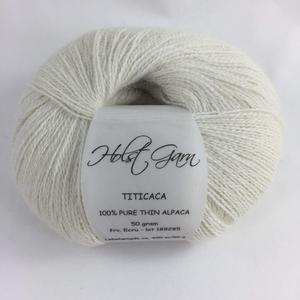
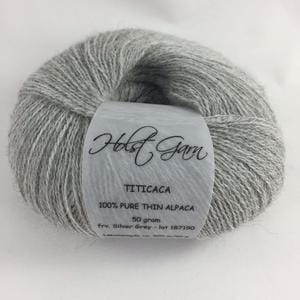
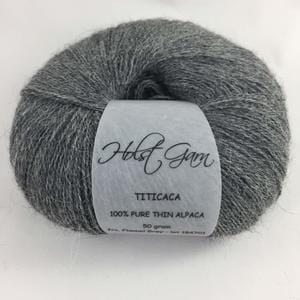
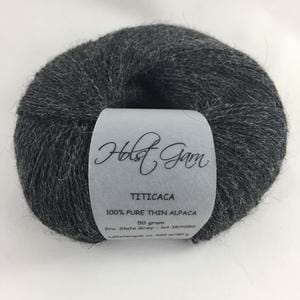
Holst Garn Titicaca (Lace Weight, approx. 400m/50g) is the purest alpaca yarn in the assortment: 100% pure Alpaca Wool, untreated, in the natural colors of the animal from natural white through gray to deep brown. Single-ply on 2.5–3mm needles for lace projects, double-ply on 3.5–4mm for lightweight sweaters and accessories with genuine alpaca drape. More in the Holst Garn Brand Guide.
All alpaca yarns and blends can be found in this collection. More about the properties, origin, and care of alpaca wool: Alpaca Yarns: Properties, Care & Special Features. Shipping from Munich, free within Germany from €100.