Fibers
There are about as many fibers as there are knitting styles. Okay, maybe not quite that many, but still quite a lot. And because all of this can sometimes be pretty confusing, we want to shed some light on the subject for you here and show you which fibers exist and what makes them special! Let’s get started:
Animal Fibers
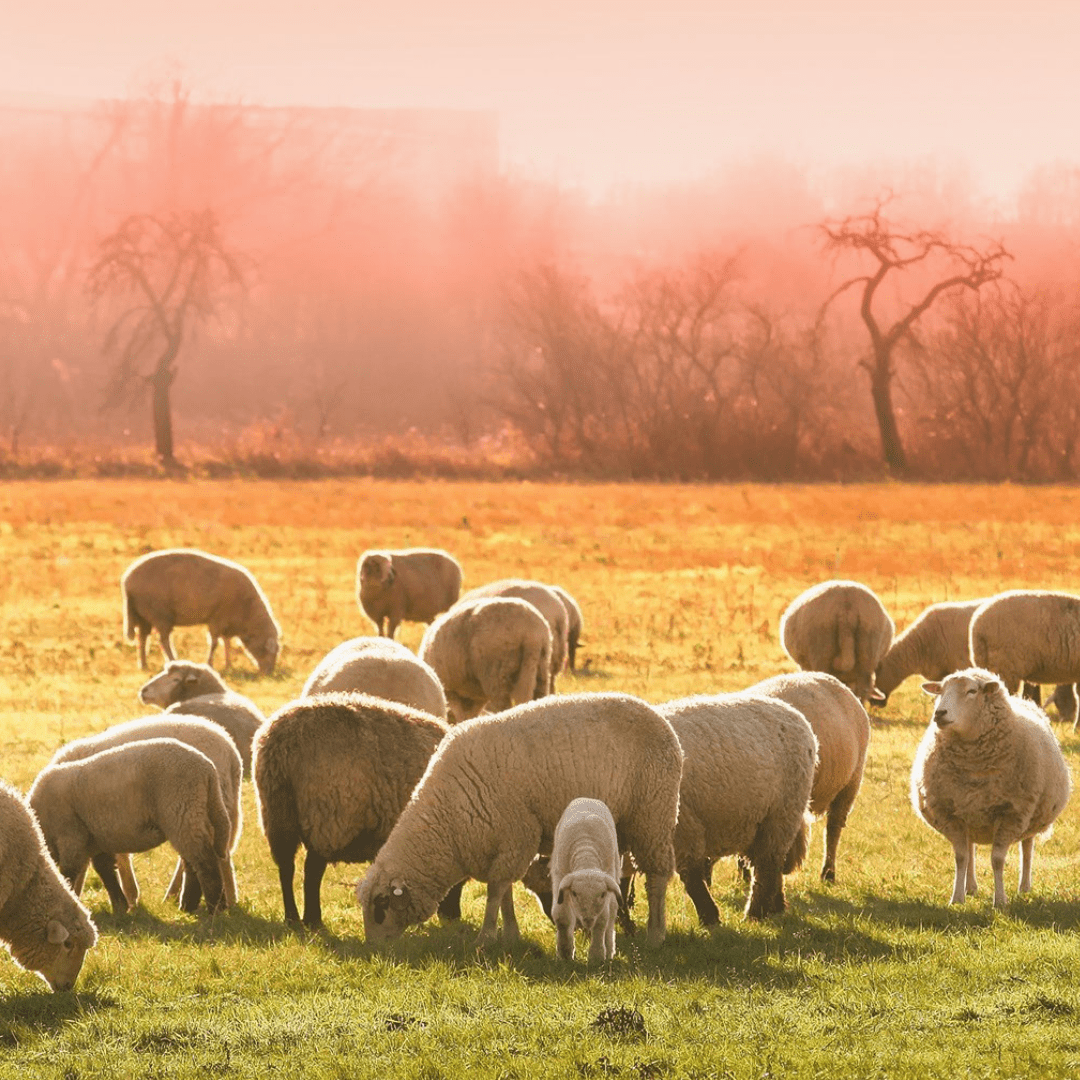
(Virgin) Wool: The absolute classic—no question. So much so that yarn is commonly called wool, even though (virgin) wool is often not actually included. I’m probably not telling you anything new here, but we want to be thorough. So, wool is spun from the fleece of sheep. It is one of the oldest textile materials ever and is still just as popular today. It is durable, flexible, and takes dye particularly well. Above all, it has excellent insulating properties. That’s why it keeps us so wonderfully warm. But virgin wool is not all the same. The sheep it comes from is crucial. For example, lambswool has the warmest and softest fiber. Merino Wool, who would have guessed, comes from Merino sheep.
Cashmere: We usually know it as a luxury term for sweaters or scarves. But it also knits wonderfully. Cashmere is especially known for its extreme softness. It is sheared once a year from the belly of cashmere goats, which are mainly found in Tibet and China. Because this fiber is correspondingly quite expensive, it is usually found blended with other fibers.
Vicuña: Speaking of extraordinary (and extraordinarily expensive) fibers, you can’t avoid Vicuña. Vicuñas live wild in the South American Andes. This means that to shear (actually comb) them, you first have to track them down in these seemingly endless expanses. Also, they produce just enough wool to be shorn every three years. Because these fibers are incredibly soft and luxurious, this effort is still worth it. Unfortunately, this also shows in the price. Nevertheless, it’s amazing to knit with such yarn. You’ll hardly find anything softer.
Fun Fact: Especially in the relevant South American countries, fashion made from Vicuña fibers is highly sought after. Unfortunately, you can quickly pay several hundred to a thousand euros for such a piece. That’s astronomical by our standards, but when you consider the local price level, it almost seems absurd. It’s probably like wanting to buy a shawl made of gold threads here. Okay, okay, maybe not quite, but you get the idea. It’s just super expensive.
Alpaca: Very closely related to the Vicuña. But there is a big advantage: it is absolutely affordable. What is similar, though, is that Alpaca Wool is also obtained more by combing than shearing. The fibers are quite long and hollow. That’s why they become especially light and warm when spun. Since alpacas are naturally mostly beige to brown, the fibers must be bleached before dyeing. The finest Alpaca fiber is the Suri. Unfortunately, Alpaca yarn has very little “memory,” meaning it can stretch out quite quickly when pulled.
Llama: At this point, we must not forget the llama. Its fiber has very similar properties to alpaca, but llama wool is less fine.
Camel: We won’t go into the exact degree of relation between camels and alpacas, vicuñas, and llamas—whether they are 15th cousins or distant in-laws. For us, it’s enough to know they are related. Camel hair, however, is neither shorn nor combed; it is collected when the animal naturally sheds it. Because camel hair is especially strong and warm, it is often used for coats. Usually, the wool remains in natural colors, as it dyes very poorly.
Mohair: Mohair is an exceptionally light and warm yarn spun from the fleece of the Angora goat, traditionally bred around Ankara in Turkey. Today, they are bred all over the world. Kid Mohair, in turn, is obtained from the fleece of young goats, which, as always, makes it softer than that of adult animals. In its characteristics, Mohair is very similar to wool, but unfortunately a bit less durable.
From here on, it definitely gets a bit exotic. Nevertheless, we want to introduce you to (and especially) the exotic animal fibers that exist out there.
Bison: Bison wool at first glance strongly resembles cashmere wool. It also feels very similar. It is significantly warmer than virgin wool and extraordinarily durable.
Quivit: Ever heard of it? This is the fiber from the undercoat of the Arctic musk ox. This is the ABSOLUTE yarn luxury. It is finer than cashmere and eight times warmer than wool. When you touch and use it, it only gets softer. As you might guess from its origin, this fiber is also outrageously expensive and therefore not very suitable for everyday knitting.
Angora: You might have noticed, we’ve heard of Angora before. However, this has nothing to do with the Angora goat. This fiber comes from the Angora rabbit. Yes, you read that right, from a rabbit. The resulting yarn is extremely soft, fluffy, and warm. It is quite labor-intensive both in processing and harvesting, as it must also be obtained by combing, and each animal produces only very little wool. Unfortunately, this means it is—once again—not only exceptionally wonderful but also quite expensive *sigh*.
Possum: A soft, lightweight fiber. The animals originally come from Australia. Because the fibers are so short and fine, they must be spun together with other fibers such as virgin wool, alpaca, or other trendy fibers.
Fun Fact: Possums were brought to New Zealand in the 1800s. Since they had no natural predators there, they spread rapidly and became a serious threat to the island’s ecological balance.
Silk: Silk is something very special. It is the epitome of luxury. However, few people actually know where it comes from. Silk is not made from animal hair; it is a protein fiber. Since it is obtained from the cocoons of the silkworm, it is still an animal textile fiber. The cocoon is basically “unwound,” with individual strands up to 1500 meters long. Then two of these threads are twisted together. As you can imagine, these threads are extremely thin, which makes processing very complicated. The already twisted thread is spun together with more threads until the right thickness is achieved. You could easily fill entire books on the topic of silk. But for now, we’ll leave it at that.
Phew, take a breath, that was quite a bit. Of course, there are many more animal fibers, but we don’t want to go overboard here, as we have other topics to cover. If you want to know more about animal fibers, please let us know in the comments, and we’ll dive deeper into the topic in another post. Now, on to Plant Fibers.
Plant Fibers
Cotton: One of the oldest known textile fibers and also the most widespread. Cotton grows wherever it is hot, and the finest come from Egypt and Sea Island. When you combine these two, you get Pima cotton, a name you might have heard before. Cotton is an ideal textile in many ways. It absorbs moisture, dries quickly, and cools. However, it also has a downside: it is less stretchy than virgin wool.
Fun Fact: Mercerized cotton (named after the Scotsman John Mercer, who developed the process) is treated with caustic soda and then stretched until it is nice and soft and strong. The French call such yarn fil d’écosse (Scottish thread).
Linen: Linen is made from the stalk of the flax plant. Turning it into a spinnable and even knit-worthy fiber is quite labor-intensive and involves several steps. But once spun, you get a shimmering, durable yarn. Like cotton, linen is excellent for hot temperatures. In woven form, linen tends to wrinkle a lot, but in knitted form, this is hardly noticeable. Linen is often blended with cotton, virgin wool, or silk.
Fun Fact: Scientists have found 10,000-year-old linen fibers during excavations, as well as evidence that flax may have been used for almost 40,000 years. This means we can say that linen or flax is one of the oldest textile fibers ever.
Ramie: Very similar to linen and cotton. Ramie is a nettle plant mainly found in China and Japan. Since it is a bit stiffer than cotton or linen, it is often blended with other fibers for knitting yarn.
So, that’s it for now. That was quite a lot already. In our next post, we want to look at synthetic and other organic fibers. If you have feedback or suggestions, please let us know in the comments. We always appreciate it!
Knitting as a Mindfulness Practice: The Meditative Power of Stitches