


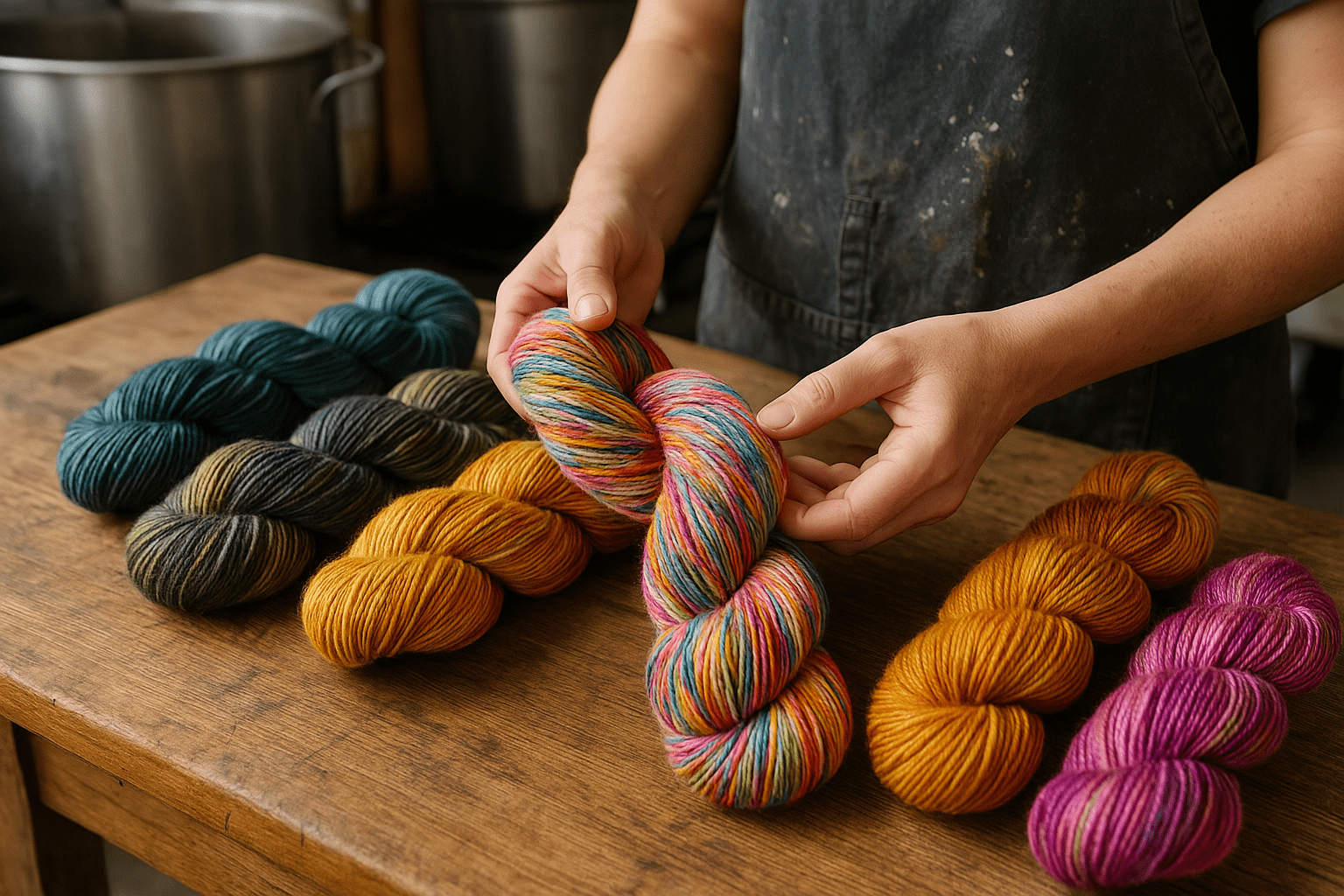
Every Ball a Work of Art: The Magic of Hand-Dyed Yarns
There are yarns – and then there are yarns that tell stories. Hand-Dyed Yarns belong to the second kind. They are like little works of art: unique. Personal. Alive. And once you knit with them, you feel the difference stitch by stitch.
What makes hand-dyed yarns special?
Hand-Dyed Yarns are the textile equivalent of hand-crafted chocolate or the wine of a small vintner: made with love, precision, and experience – in small batches, with true craftsmanship. Not industrial uniformity, but color with character.
Every batch is one of a kind.
Because they are dyed by hand, no batch is exactly like another. Even with the same color recipe, subtle nuances and surprising color transitions emerge. It is precisely this imperfection that is their beauty – and their magic.
Multidimensional colors.
Machine-dyed yarns often have a flat, one-dimensional look. Hand-Dyed Yarns, on the other hand, shimmer, shift, and play with light and depth. The color application varies intentionally – creating a liveliness no machine can replicate.
How is a hand-dyed yarn made?
1. The base
It all starts with choosing the raw wool. Many hand-dyers work with especially high-quality yarn bases – from soft Merino Wool to luxurious silk blends to sturdy Linen. The base determines how the color is absorbed – and how the yarn feels later.
2. The dyeing
Dyeing is done in small quantities – usually by hand in pots or vats. Different techniques are used:
• Acid dyeing: For bright, intense colors
• Handpainting: Colors are applied like with a brush
• Speckling: small color speckles that create lively effects
• Dip-Dye & Gradient: Color gradients and ombré effects
3. Fixing & drying
After dyeing, the yarn is fixed (usually with heat and vinegar water), then lovingly rinsed by hand and air-dried. Every detail counts – only this way do the colors stay brilliant and long-lasting.
Why are hand-dyed yarns more expensive?
Because every minute counts. Hand-dyeing is labor-intensive, time-consuming, and requires experience. The dyers stand for hours by the pots, monitor temperatures, stir, wait, rinse, hang to dry. In addition, there are:
• Small batches = no economies of scale
• High-quality yarn bases
• Artistic work, not assembly line jobs
• Individual development of each color
What you pay for is not just a skein – it is the result of talent, craftsmanship, passion.
The tradition behind hand-dyeing
Yarns have been dyed by hand for thousands of years – with plants, minerals, and later with synthetic colors. The knowledge was passed down from generation to generation long before machines took over.
Today, hand-dyeing is experiencing a revival – not only for aesthetic reasons but also as a conscious counter-movement to the mass market. It stands for:
• Creative freedom
• Sustainability
• Respect for Material & Time
• Individuality instead of conformity
What does this mean for you as a Knitter?
A hand-dyed yarn is more than just a Material. It is a creative collaboration – between you and the dyer. Between technique and intuition. Between color and form.
Tip:
Knit with two skeins alternately when working on large projects – this balances out any color differences. And enjoy the play of color – it is part of the magic.
Conclusion:
When you work with hand-dyed yarn, you are not just knitting a garment.
You are knitting a statement. Against mediocrity. For the genuine.
For the Masters of Stitches: 9 Knitting Tips for Advanced and Professional Knitters
Machine-dyed Yarns – why we also recommend these with a clear conscience